At last...a realistic,
easy-to-follow
food additives guide, so simple that most people including kids can use
it to identify and eliminate unhealthy foods that contain dangerous
food additives!
“Do
You Want To Know
What Food Manufacturers Don’t Want You To Know About The
Ingredients They Put In Your Food?”
Greatest Goldmine Of
Food Additive Safety Information Ever Crammed Into One Little
Pocket-Size Book
Dear Grocery Shopper,
If you want to easily and confidently pick from
grocery
store shelves the most healthy and delicious food ... then this is
going to be the most power-packed letter you’ll ever read!
Here's
why: Untrained,
uneducated, unknowledgeable grocery shopping is hazardous to your
health ...
Why?
Harmful
additives in your food destroy your health.
Yes,
these food additives, common in most packaged foods
- can make you fat
- give you cancer
- cause you to get diabetes
- give you heart disease
- make you have high blood pressure
- cause hormone imbalances to name just
a few
If you want to know how to remove all risk, doubt and uncertainty when
you shop for groceries, so you know for sure that the food you buy is
healthy, then read on . . . "Both my parents died of cancer! Right then
and there, I knew I didn't want that to happen to me or anyone else
– ever again. So I made a commitment that I was going to do
everything in my power to make sure that I absolutely knew how to
prevent cancer and keep myself and my patients healthy."
This quote is from Dr. Christine H. Farlow, D.C.,
also
known as "The Ingredients Investigator." She is an amazing, devoted
individual and health care professional who has dedicated her life to
saving all of us from killing ourselves with dangerous foods.
She's been eating healthy food since about 1975,
after
struggling with her own health issues. In 1984, after she became a
doctor, she started teaching her patients, and anyone who would listen,
about healthy eating. However, she became even more passionate about
investigating and searching out the most important aspects of eating
healthfully after her father was diagnosed with cancer in 1990. You
see, her dad was a "health food nut." It didn't make sense that her
father could get cancer. There had to be something more to it.
In 1991, she started teaching healthy eating
classes in
her office, to her patients, and members of the community. In each
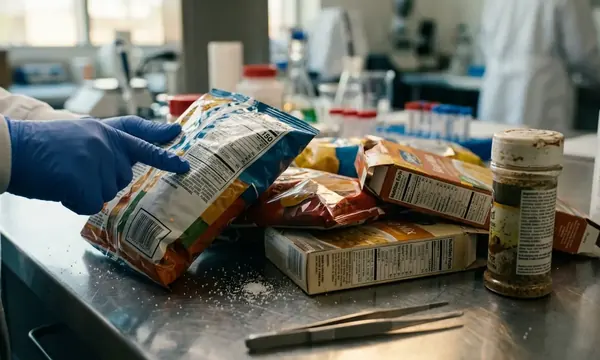
class, participants were asked to bring in packaged food items from
home. All the different additives in those items were put on a list.
Dr. Farlow then researched each additive before the next class and
handed out the list of additives with safety information and any
harmful effects.
With each class that she taught, different
additives
showed up. So, instead of repeating this process over and over again,
she just decided to research the most common food additives and put
them in a book for her patients and the members of her classes.
This is how Dr. Christine H. Farlow, D.C. came to
write her powerful and extremely valuable little book FOOD
ADDITIVES: A Shopper's Guide To What's Safe & What's Not.
What started out as a project for her patients and participants in her
classes, with a mere 60 pages, has now evolved into the revised and
expanded fifth edition, with 128 pages.
While it started as an idea on a small scale, it
has
grown into a mission to help people across the globe identify and
eliminate harmful ingredients from their food. Why? Because it is
absolutely necessary for the public to know that we are killing
ourselves daily by the food we eat. Eliminate packaged foods with
dangerous food additives and . . .
STOP
KILLING OURSELVES AND THOSE WE FEED!

128 pages
ISBN 978-0-9635635-7-6
3 3/4 x 6 3/4
$7.95
You can benefit from this astonishing research,
too.
You see, as of 2004, the latest statistics
available,
heart disease is the number one cause of death in the U.S., responsible
for over 654,000 deaths a year. Cancer is second, causing more than
550,000 deaths a year. According to the statistics, stroke is third,
causing over 150,000 deaths a year. Diabetes causes nearly 73,000
deaths a year.
In a 2005 article published in the Journal of the
American Medical Association (JAMA), the Center for Disease Control
estimates that 112,000 deaths a year are caused by obesity. Think about
this... being just 20% over your ideal weight, you increase your risk
of an early death. Let's look at some real numbers here. If your ideal
weight is 130 pounds, being just 26 pounds overweight can shorten your
life! If your ideal weight is 180 pounds, 36 extra pounds can put you
in an early grave. If this scares you, it should! But the good news is
that ...
All these causes of death and many others
are preventable ...
Yes, Preventable. They are manmade diseases and
can be eliminated with the proper nutrition and a healthy lifestyle.
In your great grandparents' days, healthy eating
was
easy. Food was grown on nutrient rich soil without herbicides and
pesticides. It was whole, natural and unprocessed. Meals, breads and
desserts were cooked or baked in the home from scratch, not produced in
a laboratory from chemicals not intended for human consumption.
Times have changed!
Today, most food comes in a box, bottle, bag or
can.
It's had most of the nutrients processed out. A few synthetic chemical
vitamins are added to make you think you're getting some nutrition.
Then it's bleached, deodorized and preserved so it can sit on a grocery
store shelf for three years and still taste fresh when you buy it.
Frequently it contains a long list of chemical ingredients that you'd
never find in your kitchen.
How are you supposed to know whether it's
healthy or not?
This is where knowing about food additive safety
comes
in. Food manufacturers are not going to tell you the truth about the
additives they put in your food. Neither is the FDA. You have to get it
from another reliable source you can trust.
FOOD ADDITIVES: A Shopper's
Guide To What's Safe & What's Not gives you
the facts ... the real truth. It is THE reliable source you can trust.
"A
great pocket resource in understanding labeleze."
-Earl Mindell, R.Ph., Ph.D.,
Author of The Vitamin Bible

Why you need to know how to read
labels ...
and understand the ingredients on the package...
It is
legal for food manufacturers to add cancer-causing additives to the
food they produce. Even though the Delaney
Clause of the 1958 Food Additives Amendment states that...
"No additive shall be deemed to be safe if it is
found
to induce cancer when ingested by man or laboratory animals or if it is
found, after tests which are appropriate for the evaluation of the
safety of food additives, to induce cancer in man or animals,”
cancer-causing ingredients can still be added
because
- Food additives in use prior to the Delaney
Clause are
classified as Generally Recognized As Safe or GRAS. They are not
required to be tested to determine if they really are safe! These
include additives like sodium nitrite and BHA. The International Agency
for Research on Cancer (IARC) says that nitrites and nitrates probably
cause cancer, and BHA possibly causes cancer. Nitrites are used in most
processed meats because they prevent botulism. BHA is frequently used
as a preservative in processed foods.
- In 1962, an amendment, the DES Proviso, was
added to the Delaney Clause which
"permitted the use of carcinogenic compounds
as
animal-feed additives and veterinary drugs as long as 'no residue of
the additive shall be found by methods approved by the Secretary by
regulation in any edible portion of the animals after slaughter or in
any food such as milk or eggs yielded by or derived from living
animals.' "
No residue is defined as meeting a
negligible-risk standard. It does not require zero residue of
cancer-causing substances.
- Pesticides, which were originally included in
the
Delaney Clause, were removed in 1996 by the Food Quality Protection Act
which
"instead instituted a general 'safe' standard
of a reasonable certainty of no harm to consumers."
This very vague definition allows
pesticides to be used that would not be permitted under the Delaney
Clause.
"I
loved your little book. Its contents are excellent....
I will use it myself as a reference."
-Bruce West, D.C., Author of HEALTH ALERT newsletter

If you buy processed food, there is very high likelihood that there are
cancer-causing ingredients in it.
Do you eat any of the following processed
meats?
- Bacon
- Ham
- Sausage
- Hot dogs
- Pepperoni
- Salami
- Pastrami
- Bologna
- Deli meats, like chicken, turkey, roast beef
Most processed meats, unless you buy organic and nitrite-free, contain nitrates
or nitrites.
As stated in the bullet above, these are chemicals that are classified
as probable carcinogens by the International Agency for Research on
Cancer (IARC). They probably cause cancer.
Are you feeding those meats to your
children?
The incidence of childhood cancer is on the rise.
Even
if your children don't get cancer while they're young, feeding them
food with cancer-causing ingredients in them now can increase their
chances of getting cancer at some later time in their life.
Other Cancer-Causing Ingredients You
Might Find In Your Food
BHA, as stated in the bullets
above, is a
preservative that IARC classifies as a possible carcinogen; it possibly
causes cancer. It may be used to preserve foods, like cereal, that come
in a box, or it may be sprayed on the packaging instead. Either way it
should be avoided.
Potassium bromate is in
brominated flour, often
found in bread. It's classified as a possible carcinogen. Most
countries in the world have banned this ingredient, except for the
United States and Japan.
Citrus Red No. 2 or FD&C
Citrus Red No. 2
is also a possible carcinogen. Its use is limited to coloring orange
skins. If you eat the orange peel or grate it to use in any foods that
you make, you will be eating a chemical that possibly causes cancer.
You can avoid this cancer-causing chemical if you buy organic oranges.
FD&C Colors are
generally derived from coal tar.
Coal tar is a human carcinogen. It is known to cause cancer. While the
FD&C colors are not themselves known to cause cancer, do
you really want to be eating additives in your food that are made from
cancer-causing chemicals?
Smoked foods may contain nitrosmaines
and polycyclic aromatic hydrocarbons (PAH), both of
which can cause cancer. There is not enough information to know if smoked
flavorings pose the same risk. Lack
of information about the safety of the chemicals added to the processed
food you eat every day is very common in the food industry.
Pickled vegetables that are
prepared the
traditional way as done in Asia are possibly carcinogenic according to
the IARC. Before you take your next bite, ask yourself: what is the "possibility" that they are right?
Would you guess American toy stores would still be full of lead tainted
toys? This shocking news has triggered massive toy recalls to protect
our innocent children. Do we have to wait until more children and
adults die to prove that our food is contaminated with deadly
substances?
Chinese style salted fish cause
cancer. Not probably, not possibly. IARC
says they do cause cancer.
"Changed
my life! About 1
year ago, I began having a lot of pain in my joints. After several
doctors, I still did not have an explanation of why my joints hurt and
why I was gaining weight even though I had always exercised and watched
my diet.
One
doctor mentioned that red meat
could trigger arthritis. I decided to find out more about nutrition and
since I have a severe peanut allergy, I wanted to find out if any of
the "safe" foods I was eating could contain peanuts.
When I
bought "Food Additives : A
Shopper's Guide To What's Safe & What's Not," I was shocked to
find
out that many of the additives that I assumed were safe actually
contained peanuts.
This book
has become my "nutrition
bible" I carry it with me wherever I go. Since using this book, I have
been able to avoid many additives that could be harmful to me. Within 1
month, I was able to begin an exercise program again without pain and I
actually lost the weight I had gained.
Christine
Hoza Farlow's book is
very easy to use and small enough to fit in your pocket or purse. The
material is straight-forward and lets you make quick choices that fit
your nutritional needs whether you have allergies or simply want to
avoid all the carcinogens that are popping up everywhere.
I have
several other books about
food additives, but I still seem to go back to this one. If you're
looking for a simple approach to understanding labels, A Shopper's
Guide To What's Safe & What's Not is definitely the book for
you!"
-Johanne Schwartz from Covina,
CA

Trans Fats increase Your Risk of Heart Disease
Trans fat is known to increase the "bad"
cholesterol
(LDL) and decrease the "good" cholesterol (HDL). It can clog your
arteries and cause Type 2 Diabetes, as well as other serious health
problems.
Hydrogenated and partially
hydrogenated oils contain trans fats. So do margarine and
butter substitutes.
The law
allows food manufacturers
to put "No Trans Fats" on the label if the product contains less than
0.5 g trans fat per serving.
However, according to the Institute of Medicine...
there is NO SAFE LEVEL OF TRANS FATS
even if it's less than 0.5 g per serving.
MSG Kills Your Brain Cells
MSG is monosodium glutamate, a flavor-enhancer
added to
most processed food to make it taste good. It's an excititoxin which
crosses the blood-brain barrier and excites your brain cells
to death. In infants and children, the blood-brain barrier is
not fully developed, making MSG even more harmful to your young ones.
The harmful component of MSG is the glutamate.
Now, it's
true that glutamic acid is an essential amino acid found in protein and
required for the human body to be healthy. It is the L-glutamic acid
that is a part of protein that your body needs. When glutamic acid is
manufactured, it contains both L-glutamic acid and D-glutamic acid.
D-glutamic acid occurs as a result of the manufacturing process only.
It is not a part of protein and your body does not need it. It is a
neurotoxin, i.e. it is toxic to your nervous system.
Hidden Sources Of MSG
D-glutamic acid is often referred to as processed
free
glutamic acid or free glutamate, and frequently lumped into the
category of MSG. It is the D-glutamate that is in so many ingredients
that are classified as hidden sources of MSG.
Hidden MSG can be found in
things like baby food and infant formula,
protein bars, powder
and drinks, most processed foods,
the waxes on fresh fruits and vegetables,
prescription and non-prescription
drugs, nutritional supplements and more.
Which of these ingredients that are hiding places for MSG are in the
foods you eat?
- Autolyzed yeast
- Yeast extract
- Yeast food
- Hydrolyzed protein
- Textured protein
- Calcium caseinate
- Sodium caseinate
Do you eat foods with these ingredients that may be sources of hidden MSG?
- Boullion
- Broth
- Carrageenan
- Natural flavors
- Protein concentrates
- Protein isolates
- Natural flavorings
- Seasonings
- Stock
Did you know there
may even be MSG in products that say NO MSG or NO Added MSG on the
label?
You will only know for sure if you know ALL the ingredients that are
the hiding places for MSG and you read the ingredients on the label.
"I am
very pleased with this book!
At first it seemed like a lot of money for a pocket-sized-book, but it
is worth every penny, even with the shipping cost added to the
purchase. I am learning a lot, and it's so easy to follow, and so very
helpful, plus it's easy to carry, just put it in your pocket. I have
highlighted the safe additives for quick reference. I highly recommend
this book to everyone!"
-Meh, A reader from Somerset,
MA

How MSG Almost Destroyed My Health!
Read what Dr. Farlow says about how MSG nearly
devastated her health...
"There was a time when I would eat food that I
believed
to be healthy ... foods that were whole, natural and marketed as
healthful choices. And yet I would react to them.
"I would get headaches. I would feel so jittery
that I
wanted to jump out of my skin. I would lose control of my tongue. If I
didn't speak very slowly and deliberately, my words came out garbled
and weren't understandable.
"It scared me!
"What was happening to my body, to my nervous
system? I
took great pains to eat healthy food. These were the types of reactions
I would expect, and have experienced in the past, when eating processed
and unhealthy foods that I no longer ate. This wasn't supposed to
happen to me now because I chose only whole natural foods."
But then she discovered THE BIG SECRET...
... the secret that the food manufacturers don't
want you to know. The secret of the hidden MSG!
You already know a few of the hiding places for
MSG
– they're listed just a few paragraphs up. But there's more.
A
lot more! And you'll find them listed in FOOD
ADDITIVES: A Shopper's Guide To What's Safe & What's Not,
under MSG
and Free Glutamates.
When you carry this handy book with you when you shop, you won't be
fooled again!
"I
recommend everyone carry this with them in their
purse or glove compartment for handy reference."
– the late Lendon H.
Smith, M.D., Author of Feed Your Kids Right
The Myth of the Artificial Sweetener
If you're like most people, you probably think
you're
doing yourself a favor by cutting back on sugar. And you are if ...
you're not substituting sugar with artificial sweeteners. You see,
sugar is empty calories. It depletes your body of necessary nutrients.
And it causes you to gain weight.
But artificial sweeteners are not the answer!
Artificial
sweeteners, for the most part, are just as bad as sugar, some even
worse.
The Worst Artificial Sweeteners
The food industry spends a lot of money trying to
make
you believe that diet products and products sweetened with artificial
sweeteners are healthy and the answer to your weight problems. However,
the food industry has one objective and only one objective ... and it's
not your health! The only objective of the food industry is
to make a profit ... even if it kills you!
Facts You
Need To Know About Some Popular Artificial Sweeteners:
Aspartame (aka Nutrasweet,
Equal, Spoonful)
was approved over the objections of the FDA's Board of Inquiry. Adverse
reactions attributed to aspartame include headaches, dizziness,
difficulty breathing, memory loss, blindness and even death. In all
there have been 92 different adverse reactions reported to the FDA.
Symptoms caused by aspartame can mimic the symptoms present in various
diseases like Alzheimer's, epilepsy, severe depression, mental illness,
Epstein Barr, chronic fatigue syndrome, multiple sclerosis and others. Aspartame
has been shown to cause cancer in rats at levels approved for human
consumption. It is genetically engineered.
Acesulfame-K (aka Ace-K,
Acesulfame-potassium)
causes cancer and elevated cholesterol in lab animals. It is known to
cause low blood sugar attacks. It has not been adequately tested for
safety.
Splenda (aka Sucralose)
is chlorinated sugar. Contrary to manufacturers claims, it is
partially absorbed by the body.
The U.S. FDA states it is 11% – 27% absorbed; the Japanese
Food
Sanitation Council says it's 40% absorbed. It has caused shrunken
thymus glands, enlarged liver and kidneys, miscarriage and diarrhea in
animal studies. Small amounts of dangerous contaminants have been
detected in sucralose. Only six human studies have ever been
done as of 2006, and the longest was three months. No
studies have ever been done with children or pregnant women.
People with chlorine allergies may suffer severe reactions.
Saccharin, previously thought
to cause cancer, was delisted as a carcinogen in 1997. However, there
are a number of prominent scientists who warn that saccharin still
poses a cancer risk and it should be avoided.
"Buy this
book now! Even though
you know instinctively that many food additives are bad for you, you
will be shocked when you actually read what these things can do to you.
The rating system is very helpful to know which items are poorly tested
and unsafe to eat, versus those that may only cause an allergic
reaction. The book is small and I carry it with me every day."
-A reader from Sydney, Australia
This is only the tip of the iceberg!
There are more than 3000 different chemicals
intentionally added to your food. Safety testing of these chemical
additives is generally done by the company that produces the chemicals
or uses them in the food they produce. They have a vested interest in
those chemicals testing safe!
What is really disturbing about these chemicals
that are added to your food is the fact that the majority of
the ingredients have not been thoroughly tested.
You see, when Dr. Farlow was investigating the safety of the additives
that are allowed in your food, she checked the Manufacturer's Safety
Data Sheets for health, safety and toxicological information. By far,
the most common statement she found on most of these reports was "To
the best of our knowledge, the toxicological properties of this
chemical have not been fully investigated."
What are toxicological properties they're
referring to?
They are referring to the chemical's ability to
cause:
- Tumors
- Mutations or changes in your DNA or genes
- Damage to your reproductive or endocrine system
- Birth defects
- Cancer
Most of the
processed foods on the market contain ingredients that have not been
fully tested for safety.
Many of the products contain ingredients that can cause cancer or other
harmful effects on your body. These ingredients are in the food you eat
every day ... legally!
Is it any wonder that heart disease, cancer,
diabetes and obesity are at an all time high?
On August 13, 2007, The Guardian reported that
"Despite
being one of the richest countries in the world, [the life expectancy
in] America has dropped from 11th to 42nd place in 20 years, according
to official US figures."
"The US also has a higher infant mortality rate
than many other countries: 6.8 deaths for every 1,000 live births."
Have you ever wondered why the state of
health in the U.S., one of the richest countries in the world, is so
abysmal?
The authorities suggest that it's due to a lack of
health insurance. They ignore the chemical-laden, nutrient-void,
processed foods lining the grocery store shelves, eaten on a daily
basis by the majority of the population.
You and your children are being
brainwashed by
commercials and advertisements promoting fake foods, full of chemicals,
produced in a laboratory, that don't have any resemblance to real food
except for the pictures and the words on the front of the package.
"This is
a nice compact reference
for all the times you are shopping and wonder what those mysterious
ingredients are in your foods. The reference tells you which ones are
safe and which ones will be harmful... An easy way to get educated
while you shop or looking through your food pantry to make sure you
consume what is safe."
- Lisa Jeanne, Walpole, MA

You need to read labels more today than ever
before!
Food additives are in almost all packaged foods,
even
from a health food store. Because consumers are more aware about eating
healthfully, food manufacturers are designing packages to make it look
like the food is healthy. However, if you read the ingredients on the
label you'll find, in many cases, that it's not true.
How can you eat and feed your family healthy
food ...
... under these circumstances?
You're probably very conscientious and concerned
about
eating and feeding your family healthy food. You most likely didn't
know that food manufacturers hide harmful ingredients that consumers
are conscious about, like MSG, so they don't appear on the label.
Or that the food industry tries to make you
believe
ingredients, like Aspartame or Nutrasweet, canola oil, soybean oil,
Olestra and Splenda are healthy for you, when in fact they're not. The
food industry is outright lying to you.
"This
little book should be in
every food buyer's possession. I highly recommend it. Anyone who takes
the responsibility of buying food ... should have this book as a guide.
It gives the bottom line of what many of the common chemicals that are
used in the processing of our foods do to our bodies. You don't have to
be a PhD to understand what's spelled out so well in this pocket size
book, you only have to have the courage to follow its inherent message
and be well on your way to being healthy again."
- Razel
Your family's health is at stake!
The FDA is not going to protect you. FDA officials
have
been known to leave the FDA and go to work for the food industry. Food
industry officials have been given positions in the FDA. This is what
the Townsend Letter for Doctors called "The Revolving Door of
Employment" between the FDA and the food industry. It's happened in the
past and it's still happening now.
You're bombarded with so much misinformation from
the
media – newspaper, magazines, radio and TV – it's
no wonder
you have a hard time determining what's healthy and what's not. Often,
even doctors are misled and fooled about what's really healthy.
Sadly, the main objective of the food industry is
not to
produce foods that are good and healthy for you. It's to make a
profit—even if it kills you.
You need a reliable source of accurate
information,
about the chemicals that are put in your food; one that you can trust
to tell you the truth, the whole truth and nothing but the truth.
FOOD ADDITIVES: A Shopper's Guide To
What's Safe & What's Not ...
... gives you all the information you need to
- Read labels right to save your life
- Identify – quickly and easily
– dangerous ingredients in your food
- Avoid hidden MSG – a flavor enhancer
that kills brain cells – in common foods you eat every day
- Never again be fooled by deceptive food
packaging
- Be an informed consumer – know the
REAL facts about food additives that could destroy your health
"I'm
a graduate student in Nutrition
and have found your booklet most helpful
compared to others that I've used."
- Brenda L. Johnson

FOOD ADDITIVES: A Shopper's Guide To What's Safe
& What's Not, Revised 2007 edition
is a handy pocket sized book. It gives you the safety ratings on more
than 1000 commonly used food additives. You can easily fit it in your
pocket or purse and take it to the grocery store every time you shop.
It's a quick reference that allows you to identify the ingredients in
foods that are harmful to you and your family. It will help you to
choose safe and healthy foods and avoid those foods with ingredients
that are unsafe or could cause allergic reactions.
Ask Yourself These Questions...
- Do you want to live a healthy life?
- Do you want health for your children and those
you care about?
- Is it worth eliminating foods that could kill
you from your diet now and forever?
- Is the small cost of this book worth saving
your life and the lives of your children and the loved ones you feed
every day?
- In the grocery store, are the few moments it
takes to
read the labels and check your shoppers guide worth your life and the
lives of those you love?
If your answers to these simple
questions are yes, then PLEASE change your food buying habits forever.
Be an informed consumer... NOW.
How?
Carry Food Additives: A Shopper's Guide ...
with you
every time you enter a grocery store and use it to save your precious
life and the lives of those dear to you!

128 pages
ISBN 978-0-9635635-7-6
3 3/4 x 6 3/4
$7.95
FREE Bonuses
1. Aspartame Special Report
This report is
condensed from a two-hour keynote address I gave at a women's
conference in July 2000. I spent hundreds of hours researching
aspartame. I wanted to find out the truth. I uncovered the facts about
- how the research was done,
- who did the research,
- what part of the research findings was
presented to the FDA
- what was withheld from the FDA prior to
approval,
- what are the chemicals that make up
aspartame
- how safe are they
- how stable are they
- why aspartame was approved when the FDA
board of inquiry found it unsafe
- the FDA Director hired to get aspartame
approved, who then left the FDA to work for
- what foods, vitamins, OTC medications and
prescription medications contain aspartame
- how to tell if a product contains aspartame
if it's not listed on the label
- adverse reactions that many people suffer
as a result of consuming aspartame
- what diseases can be misdiagnosed when it
is really an aspartame reactions
2. MSG Safety Report MSG is
a neurotoxin. It
affects the how your brain functions. It scared me when it was messing
with my brain and I didn't know what was happening. I've done the
research and found the facts about MSG safety. In this report, you will
learn about
- Baby formulas that contain MSG
- Companies that have listed "No MSG" on
their labels when the product did contain MSG
- Why some people have MSG reactions after
eating certain fruits or vegetables
- Hidden sources of MSG
- Ingredients that always contain MSG
- Ingredients that frequently contain MSG
- Foods that frequently contain MSG
- Non-food products that may contain MSG and
give you a MSG reaction
- Other ingredients that MSG sensitive people
may react to
- Symptoms caused by MSG
- Other reputable resources for MSG
information
3. The Stevia Story Stevia
is an ancient herb
used for hundreds of years by the natives of Paraguay and Brazil for
its medicinal properties and sweetness. In this report, you will learn
about
- The different forms of stevia
- The benefits of stevia
- The difference between Paraguayan and
Chinese Stevia and which is superior
- The safety of stevia
- Why stevia was banned in the US
- How to substitute stevia for sugar
- How to use stevia to improve your digestion
- How to use stevia to reduce wrinkles and
heal blemishes
- My favorite recipe for the healthiest
applesauce bread, sugar-free, sweetened with stevia
"I'm
a graduate student in Nutrition and have found your booklet most
helpful compared to others that I've used." - Brenda L.
Johnson

Guarantee. Your satisfaction is 100%
guaranteed. If for any reason, you are not delighted with the books you
purchase from Healthy Eating Advisor, return within 1 year of purchase,
in original condition for a full refund, excluding shipping.
Privacy Policy
©
copyright 2003-2009, HealthyEatingAdvisor.com. All rights reserved.
The Healthy Eating Advisor, P.O. Box 462335, Escondido, CA 92046-2335
Telephone(760)735-8101
|