Navigating the grocery aisle should not feel like decoding a chemistry exam, but some days it does. One box says organic, another says all natural, a third has leaves printed across the front and says very little that can be checked.
In label reviews, I treat the grocery label as a risk-sorting tool rather than a wellness slogan. That means separating claims backed by a government standard from claims that mainly function as marketing language. Readers sometimes come to this topic after encountering additive-focused work from Christine H. Farlow, D.C., including Dying To Look Good from KISS For Health Publishing; the practical question is the same: which words on a package actually help you reduce unwanted food chemicals?
What's Inside
- Why food labels matter for your health
- How USDA organic rules work
- What all natural actually means
- Which label offers stronger safety controls
- Where food labeling falls short
- A store routine for better choices
Why Do Food Labels Matter for Your Health?
The front label is not the whole food
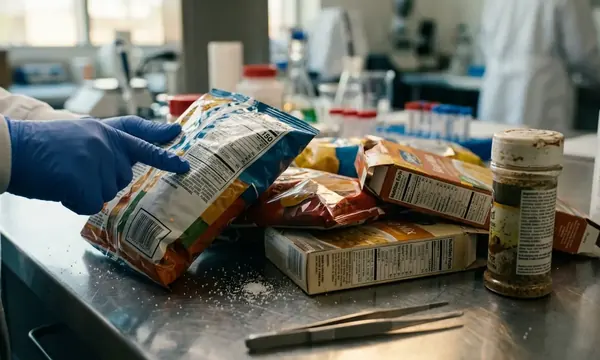
Food labels matter because modern packaged foods often carry more claims than clarity. A cereal can look earthy on the front panel and still be built around refined flour, sweeteners, and industrial oils. A snack can say natural while giving you very little information about how its crops were grown.
The most useful information is usually not the prettiest part of the package. Ingredient lists on packaged foods are ordered by descending predominance by weight, so the first 3 to 5 ingredients usually tell you whether the food is mostly refined starch, added sugar, oil, or whole-food ingredients.
Field Note: When a package has several front-of-package claims, read the ingredient list before you decide what the claims mean. The front panel sells the product; the side panel tells you what is doing most of the nutritional work.
Organic and natural are not interchangeable
The central difference is regulatory. The term organic is tied to the USDA National Organic Program. The term natural on most FDA-regulated foods is guided by policy language rather than a completed formal definition.
That gap matters if your goal is to avoid certain synthetic agrochemicals, genetically modified ingredients, irradiation, or unnecessary additives. It also matters for allergens. Since January 1, 2023, sesame has been included among the major food allergens that must be declared under federal food labeling rules, alongside milk, eggs, fish, crustacean shellfish, tree nuts, peanuts, wheat, and soybeans. Some label information is governed tightly; some claims sit in a softer zone.
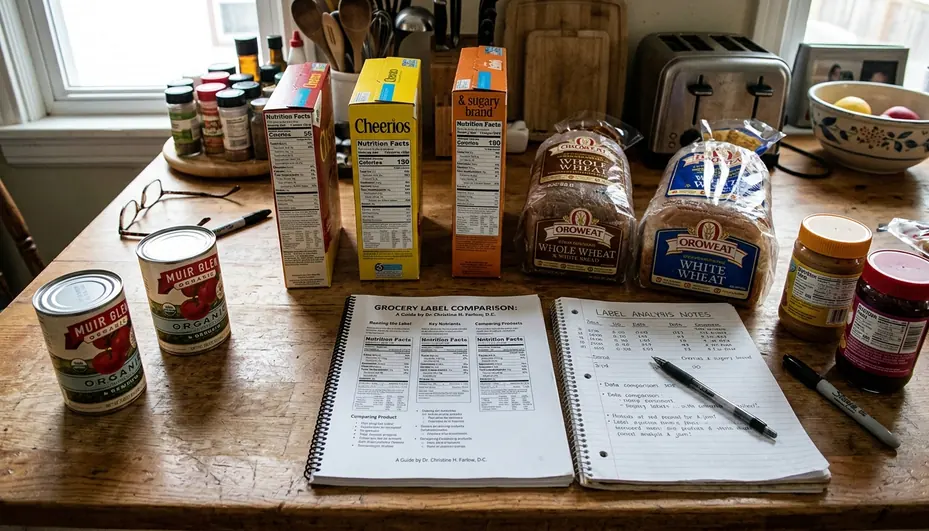
How Does the USDA Define Organic Foods?
A regulated production and handling system
Organic is not just a farming mood or a green-colored logo. USDA organic standards are housed in the National Organic Program regulations at 7 CFR Part 205, and those rules cover how agricultural ingredients are produced, handled, and represented on labels.
For crops, land generally must have had no prohibited substances applied for 36 months before the harvest of a crop represented as organic. Organic crop production prohibits most synthetic fertilizers and most synthetic pesticides unless a specific material appears on the National List of Allowed and Prohibited Substances. Organic regulations also prohibit irradiation and excluded methods, including most genetic engineering methods, for products sold as organic.
That is the part shoppers often miss. Organic is not only about what is absent from the finished food; it is about a documented system before the food ever reaches the package.
The three organic label categories
The wording matters. A product labeled 100% Organic must contain only organically produced ingredients and processing aids, excluding water and salt. A product labeled Organic must contain at least 95% organic ingredients, excluding water and salt. A product labeled Made with Organic Ingredients must contain at least 70% organic ingredients and may not display the USDA organic seal.
- 100% Organic: Only organically produced ingredients and processing aids, apart from water and salt.
- Organic: At least 95% organic ingredients, excluding water and salt.
- Made with Organic Ingredients: At least 70% organic ingredients and no USDA organic seal on the package.
A certified organic packaged food must also identify the certifying agent, commonly with wording such as Certified organic by followed by the certifier name. That small line is not decorative. It connects the product to third-party review and inspection rather than leaving the claim entirely in the manufacturer’s hands.
What Does "All Natural" Actually Mean?
The word sounds broader than it is
Natural is where many careful shoppers get tripped up. The word feels like it should cover farming practices, pesticide use, genetic engineering, animal feed, processing, and additives. In practice, it does much less.
The FDA has not completed a binding, comprehensive definition of natural for most foods under its jurisdiction. The agency’s policy has generally considered natural to mean that nothing artificial or synthetic, including color additives from any source, has been included in or added to a food if that substance would not normally be expected to be there. The FDA's policy on the term "natural" is useful to read because it shows how narrow the claim can be.
The loophole is production method
Natural does not require a 36-month transition period for farmland. It does not prohibit genetically engineered crops as a category. It does not require annual third-party farm inspection.
That means a natural granola bar can contain conventionally grown ingredients, while an organic apple has a stronger verified production standard even though both may look wholesome on the front label. This is not a comment on whether one food tastes better. It is a comment on what the label allows you to verify.
Important: Natural may tell you something about certain added artificial or synthetic substances. It does not, by itself, tell you that the crop was grown without conventional synthetic herbicides or insecticides.
Organic vs. Natural: Which Is Safer?
The better question is: which claim creates a control point?
A common shopper question is whether organic food is safer than natural food. The evidence-based answer is narrower than many people want: organic provides more enforceable controls for reducing exposure to prohibited synthetic inputs, while natural does not create the same farm-to-table audit trail.
For residue exposure, the practical difference is not that organic means zero residues. It means the grower is legally bound to an input standard and must keep records that a certifier can inspect. A natural product can still be made from crops grown with conventional synthetic herbicides or insecticides unless another verified claim separately restricts those practices.

Organic vs. natural food label quick check
Organic vs. Natural Food Label Quick Check| Label issue | Organic | Natural |
|---|---|---|
| Legal framework | Defined under USDA National Organic Program rules at 7 CFR Part 205. | Guided by FDA policy language for most foods, without a completed organic-style definition. |
| Production inputs | Prohibits most synthetic fertilizers and most synthetic pesticides unless allowed on the National List. | Does not restrict conventional crop inputs unless another verified claim applies. |
| Genetic engineering | Prohibits excluded methods, including most genetic engineering methods. | Does not prohibit genetically engineered crops as a category. |
| Verification | Requires certification, inspection, records, and a certifying agent on packaged foods. | Relies much more heavily on the manufacturer’s use of the claim. |
| Nutrition quality | Can still be high in added sugars, refined starches, or added oils. | Can also be highly processed or built around refined ingredients. |
For consumers trying to minimize exposure to synthetic agrochemicals, organic is the only legally enforceable guarantee among these two terms. Natural may still appear on a perfectly reasonable food, but it is not the label I would use as the main chemical-input screen.
What Are the Limitations of Food Labeling?
Organic does not automatically mean healthy
This is where the health halo shows up. A certified organic soda may avoid prohibited synthetic crop inputs in its ingredient supply chain while still delivering a high added-sugar load. Organic cane sugar is still a refined carbohydrate.
Nutrition Facts labels use a Daily Value for added sugars of 50 grams per day on a 2,000-calorie reference diet. That number gives you a way to place a sweetened organic food in context instead of letting the seal do all the thinking for you. The health-halo risk is highest when the front label is read but the serving size, added sugar line, sodium line, and first ingredients are skipped.
Some good farms may not carry the seal
An uncertified local farm may use organic-style practices but lack the USDA seal because certification costs and paperwork can be disproportionate for very small operations. Small operations selling no more than $5,000 per year in organic agricultural products may be exempt from organic certification, although they still cannot misuse the organic claim.
So the absence of a seal is not always a red flag, especially at a farmers market where you can ask direct questions about soil practices, pest control, livestock feed, and spraying schedules. Packaged food is different. When there is distance between you and the producer, verification matters more.
Bottom Line: Organic certification verifies production and handling standards; it does not turn a highly processed food into a nutrient-dense food.
How Can You Make Better Choices at the Store?
A repeatable label routine
You do not need to memorize every regulation to shop better. You need a sequence you can repeat when the aisle gets noisy.
- Start with the food form. Identify whether the food is whole, minimally processed, or highly processed before giving weight to any front-of-package claim.
- Use organic for chemical-input avoidance. Prioritize the USDA Organic seal or a clear Certified organic by statement over the word natural.
- Scan the first 3 ingredients. They usually represent the largest share of the product by weight.
- Check added sugars. Compare grams per serving against the 50-gram Daily Value, and treat unusually small serving sizes as a possible masking tactic.
- Match the label to the category. For produce, meat, dairy, eggs, grains, and baby foods, organic has the strongest label value because these foods are closest to agricultural production inputs.
Choose whole foods first, labels second
Organic and natural labels can help, but they should not replace common sense about food form. Fresh vegetables, fruits, beans, lentils, plain grains, nuts, seeds, eggs, fish, and minimally processed dairy usually give you more nutritional value than a heavily packaged snack with a clean-looking front panel.
Use organic as a tool for avoiding certain chemicals and verifying production standards. Use the ingredient list and Nutrition Facts panel to decide whether the food belongs in your cart often, sometimes, or rarely. That combination is less glamorous than a front-label promise, but it works better in real grocery aisles.