What's Inside
- Understanding the Shift Toward Genetically Engineered Foods
- What Do GE and GMO Actually Mean on Food Labels?
- Which Everyday Foods Contain the Most GMOs?
- What Are the Documented Health Risks of GMO Corn?
- Why Is Certified Organic Food Sometimes Hard to Find?
- How Can You Effectively Screen Your Groceries?
- What Are the Best Holistic Alternatives to GMO-Heavy Oils?
Understanding the Shift Toward Genetically Engineered Foods
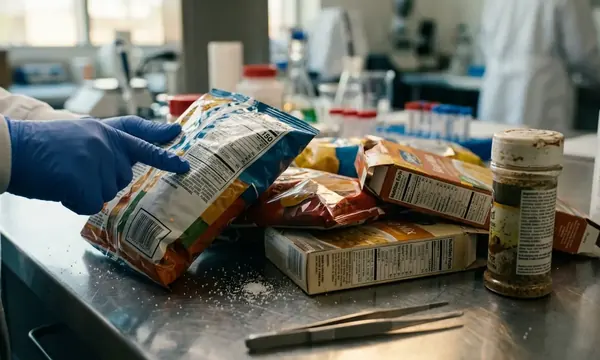
Most shoppers do not meet genetically engineered food as a whole ear of corn labeled in a technical tone. They meet it as corn syrup in a granola bar, soy lecithin in chocolate, cottonseed oil in crackers, or canola oil in a salad dressing that looks ordinary on the shelf.
That is why I start with prevalence, not politics. Commercial GE soy, corn, cotton, and canola moved into North American commodity channels in the mid-to-late 1990s. By the turn of the 2000s, concern about packaged foods had become visible enough that ordinary grocery shoppers were asking whether the ingredient panel told the whole story.
A 4-step grocery pass

The engineering goal matters. Many genetically engineered plants were designed to tolerate herbicide use or resist specific pests, which changes the way those crops move through large-scale agriculture. For the shopper, the practical issue is not whether a single ingredient sounds technical. It is whether a high-risk crop has been blended into a commodity ingredient before the food ever reached the package.
Why school lunch campaigns mattered
Early school-food activism focused on the staples children ate repeatedly: corn chips, soy-based meat substitutes, breads with soy flour, sweetened drinks made with corn derivatives, and cafeteria cooking oils. Parents were not asking for perfection. They were asking for a clear answer about gene-altered ingredients in high-volume meals.
Bottom Line: GE ingredients are easiest to miss when they appear as commodity derivatives, not when they appear as recognizable whole foods.
What Do GE and GMO Actually Mean on Food Labels?
GE and GMO are often used as if they mean the same thing. In label work, I keep a small distinction in mind because it helps prevent confusion.
The label-language difference
GE means the organism’s genetic material was altered using genetic-engineering methods. GMO is the broader marketplace term people commonly use for the resulting organism or ingredient. In the grocery aisle, both terms usually point to the same practical question: did this ingredient come from a genetically engineered crop source?
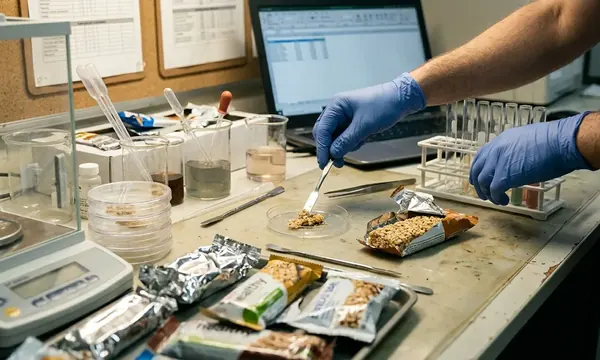
The definitive scientific method is DNA analysis, commonly PCR-based testing that targets an inserted sequence or a known transformation construct. Testing whether soy or corn is present is not enough. The test has to look for the engineering signal.
There is one technical catch worth keeping in your head. Highly refined oils, sugars, and starch syrups may contain little or no intact testable DNA even when they were produced from a GE crop source. For label screening specifically, the weak spot is source ambiguity in highly refined ingredients.
Where additive decoding fits
This is where the older additive guides still earn their space on the kitchen shelf. Christine H. Farlow, D.C., author of Dying To Look Good through KISS For Health Publishing, helped popularize the habit of tracing technical ingredient names back to likely crop sources. Her work is useful for ingredients such as maltodextrin, dextrose, soy lecithin, modified food starch, and citric acid.
Field Note: A label does not need to say “GMO” to deserve a second look. Sometimes the clue is simply “modified food starch” without a clear crop source.
Which Everyday Foods Contain the Most GMOs?
If you want a short screening list, start with four crops: soy, corn, canola, and cottonseed. They matter because they disappear into processed food so easily.
Start with invisible ingredients
- Soybean oil
- Soy protein isolate
- Soy flour
- Textured soy protein
- Soy lecithin
- Corn starch
- Corn syrup
- Dextrose
- Maltodextrin
- Canola oil
- Cottonseed oil
- Vegetable oil when the source is not specified
Dr. Tim O’Shea’s practical warning about soy remains useful: GMO soy is not confined to tofu or soy milk. It can show up in breads, bars, cereals, meat substitutes, infant foods, sauces, and snack coatings. That observation changes the hunt from “avoid soy foods” to “recognize soy derivatives.”
A conventional snack can advertise no artificial flavors and still contain corn syrup, soy lecithin, or cottonseed oil. Clean-sounding front-panel language does not rule out GMO-risk ingredients.
A historical infant-formula example
One late-1990s example often cited by anti-GE label advocates involved a nationally sold soy-based infant formula, Enfamil ProSobee. The concern was not that parents had ignored the label. It was that soy ingredients could be scrutinized while the front label did not make GE status clear to parents buying food for infants.
A late-1990s grocery-store investigation by a national consumer-testing publication also pushed this issue into public view. It examined ordinary packaged foods containing corn or soy derivatives and helped popularize the phrase “hidden genetically engineered ingredients.” That phrase stuck because it described the shopper’s lived experience.
What Are the Documented Health Risks of GMO Corn?
A 2009 University of Caen analysis is best read as a signal study, not as a final verdict on every GE food. It reviewed 90-day rat feeding data for three GE corn lines and focused on blood and organ-function markers rather than consumer symptoms.
What the study reported
The underlying feeding trials included diet levels of 11% and 33% GE corn. The authors described sex- and dose-associated changes concentrated in kidney and liver parameters, with kidney markers more prominent in males and liver markers more prominent in females.
That does not translate neatly into a grocery-store diagnosis. It does, however, explain why many cautious shoppers treat GMO corn as more than a labeling preference. Kidney and liver markers matter because those organs handle filtration, metabolism, and detoxification work all day long.
The pesticide-tolerance question
The biological concern is also cumulative exposure. A herbicide-tolerant corn crop can enter the diet as corn meal, starch, syrup, oil, or animal feed. Pesticide-residue questions are handled separately from the inserted genetic trait, but the shopper experiences both through the same food system.
Important: Do not use one animal-feeding analysis as a personal medical diagnosis. Use it as a reason to tighten ingredient screening when corn derivatives appear often in your weekly foods.
Why Is Certified Organic Food Sometimes Hard to Find?
Certified Organic is one of the safest label shortcuts for avoiding GMO ingredients. It is not the only sign that a farmer is using careful practices.
In the U.S., land generally must go 36 months after the last prohibited substance application before crops from that land can be sold as certified organic. That transition period can be a heavy lift, especially for a small farm that already avoids GE seed and synthetic pesticides but has not completed the paperwork, inspection, and cash-flow requirements.
The cost barrier is real
Small farms can face certification and inspection costs in the approximate range of $400 to $3,000 per year before counting recordkeeping labor, label redesign, or lost revenue during the transition period. Federal organic cost-share programs, when funded and available, have commonly reimbursed up to $750 per certification scope. That helps, but it does not erase the burden for very small operations.
Context-dependent variation matters here: a small farm may avoid GE seed and synthetic pesticides but skip certified organic status because of the 36-month transition period, inspection cost, or paperwork burden. The label alone may understate the farm’s actual practices.
Conventional food has its own cost pressure
Daily Telegraph reporting on farming costs has highlighted how conventional agriculture depends on diesel, irrigation, transport, synthetic nitrogen fertilizer, and pesticide manufacturing. Oil and natural-gas price changes can show up in farm input invoices over 30 to 90 day purchasing cycles.
That cost structure matters because it keeps the large commodity system tied to inputs that small diversified farms may use differently or avoid. For the shopper, the practical answer is balanced: buy Certified Organic when you can, ask local farms specific questions when you have access, and keep reading conventional labels because the store shelf will not always give you a perfect option.
How Can You Effectively Screen Your Groceries?
A good screening method should be quick enough to use with a cart, a child asking for crackers, and a frozen item starting to sweat. It should not require a chemistry degree.

- Scan for the four high-risk crop sources. Look first for soy, corn, canola, and cottonseed.
- Read the actual ingredient panel. Front-panel claims such as “natural” or “no artificial flavors” do not answer the GMO question.
- Check for organic or non-GMO verification. If the item is conventional and contains a high-risk crop source, continue to confirmation before buying.
- Use a guide for categories that get reformulated often. Baby foods, cereals, dairy alternatives, oils, snacks, sweeteners, and meat substitutes deserve extra checking.
In practice, once shoppers know the crop-risk terms, a reliable pass takes about 20 to 40 seconds per packaged item: read the ingredient panel, identify soy/corn/canola/cottonseed derivatives, check for organic or non-GMO verification, then decide whether the item needs guide confirmation.
Use guides as verification, not as a substitute for reading
The Non-GMO Shopping Guide, co-produced by the Center for Food Safety and the Institute for Responsible Technology, is most useful by category. It helps when you are comparing baby foods, cereals, oils, snacks, sweeteners, or meat substitutes and need a second layer of confirmation.
The Weston A. Price 2008 shopping guide is better treated as a historical brand-and-category snapshot. Packaged-food formulas can change within roughly 6 to 18 months after a guide is printed, so the printed guide and the current label need to agree.
For ingredient decoding, Dr. Farlow’s expanded 2007 Food Additives guide is useful when you run into ambiguous terms such as modified food starch, mono- and diglycerides, citric acid, xanthan gum, maltodextrin, and natural flavors.
Field Note: If a product contains a high-risk crop ingredient and offers no organic or non-GMO signal, I treat it as unresolved until another source confirms it.
What Are the Best Holistic Alternatives to GMO-Heavy Oils?
Avoidance only gets you halfway through dinner. If you remove canola oil, cottonseed oil, and vague “vegetable oil,” you still need fats that behave well in a skillet, a muffin tin, or a soup pot.
Swap the oil by cooking method
- For lower-to-moderate heat sautéing: use grass-fed butter when the flavor fits the dish.
- For hotter pans: use ghee, because the milk solids have been removed.
- For baking or medium-heat sautéing: try extra virgin coconut oil when a light coconut flavor is acceptable.
- For recipes that call for liquid canola oil: test melted butter or coconut oil at a 1:1 volume starting point, then adjust texture after one batch.
Extra virgin coconut oil is highly saturated and comparatively resistant to oxidation. That stability is the reason it works well in baking and moderate-heat cooking, not because every recipe needs to taste like coconut.
Add mineral-rich foods, not just cleaner labels
Bone broth is a practical addition when families are moving away from processed, oil-heavy foods. Poultry bones are typically simmered for 12 to 24 hours, while beef bones often simmer for 24 to 48 hours. Vinegar is often added early to help draw minerals from bone and connective tissue.
Bone broth contributes minerals associated with skeletal and metabolic support, including calcium, magnesium, and phosphorus. The final amount depends on bone type, simmer time, water volume, and whether the broth is reduced.
Bottom Line: The cleanest GMO strategy is not a long forbidden-food list. It is a repeatable grocery screen, a short list of safer staple fats, and enough label confidence to make the next shopping trip calmer.