What's Inside
- How saliva can reflect oral and digestive conditions
- What Candida overgrowth means in a gut-health context
- How to perform the Candida spit test without contaminating the observation
- How to read strings, cloudiness, sinking saliva, and clear surface saliva
- Why the test has scientific limits and when clinical testing matters
- Food-based steps for reducing yeast-supporting inputs
- A practical next-step pathway for digestive health
Understanding the Connection Between Saliva and Gut Health
The Candida spit test starts in the mouth, but the question behind it belongs to the whole digestive tract.
The oral cavity and the digestive tract are physically continuous. Saliva is swallowed all day, mixes with food, and reaches the stomach as part of the first stage of digestion. That does not mean saliva can diagnose every gut condition. It does mean the mouth is not separate from digestion, and changes in oral biofilm, tongue coating, mucus, hydration, and diet can give useful context.
Why saliva gets used as a screening clue
A lower-concern observation

In practice, I treat saliva observations as field notes, not verdicts. A coated tongue after a week of sweetened coffee drinks, poor sleep, and refined snacks tells a different story than one cloudy glass after sleeping with the mouth open.
The home setup is simple: a clear glass, room-temperature water, morning saliva, and up to 60 minutes of observation time. Its accessibility is the reason people keep using it. Its weakness is the same: easy tests are easy to overinterpret.
Bottom Line: The Candida spit test may prompt a closer look at oral health, digestive symptoms, and dietary patterns, especially frequent refined sugar intake or repeated antibiotic exposure.
What Exactly Is Candida Overgrowth?
Candida albicans is an opportunistic fungus. It can live on mucosal surfaces such as the mouth, gastrointestinal tract, and vagina without causing illness. The problem is not the mere presence of Candida; the concern is overgrowth in a disrupted terrain.
For a careful overview of how Candida behaves in the body, the clinical understanding of Candida albicans overgrowth is a useful starting point.
Common disruption patterns
A helpful history window is the prior 30 to 90 days. That window often captures antibiotic use, corticosteroid exposure, acute illness, or a major increase in refined sugar intake. Chemical food additives and heavily processed foods can also matter because they tend to travel with sweeteners, refined flours, flavoring blends, and low-fiber eating patterns.
Symptoms discussed in Candida protocols often include:
- Persistent sugar cravings
- Bloating after carbohydrate-heavy meals
- Coated tongue
- Recurrent vaginal yeast symptoms
- Fatigue not relieved by sleep
- Difficulty concentrating or “brain fog”
One symptom by itself is rarely enough to build a useful picture. A reader with recurrent vaginal yeast symptoms after antibiotics needs clinical evaluation even if the spit test looks normal.
How Do You Perform the Candida Spit Test at Home?
During protocol evaluations, timing is the controlling variable. Do the test within 5 minutes of waking, before water, brushing, tongue scraping, mouthwash, chewing gum, breakfast, supplements, or coffee. Once you rinse or swallow a drink, you have changed the material you are trying to observe.
Morning Candida Spit Test Checklist
- Use the test within 5 minutes of waking.
- Do not drink water, brush teeth, scrape the tongue, rinse, chew gum, or eat first.
- Fill an 8 to 12 ounce clear, smooth-sided glass at least halfway with room-temperature water.
- Avoid textured, tinted, or cloudy glassware.
- Let saliva collect naturally in the mouth for 30 to 60 seconds.
- Do not forcefully cough mucus up from the throat.
- Spit gently onto the surface of the water instead of blasting saliva downward.
- Set the glass on a level surface under direct kitchen light or beside a bright window.
- Observe at 15, 30, 45, and 60 minutes without moving the glass.
Important: Force changes the initial sinking pattern. Cloudy strings appearing only after forcefully coughing mucus into the glass are more consistent with respiratory or postnasal mucus contamination than a clean saliva observation.
If you want a cleaner comparison, keep the setup identical each time: same glass style, same water temperature, same lighting, same observation schedule.
How Should You Interpret Your Spit Test Results?
Start with what you see, not what you fear. The most useful notes are plain observations: surface layer, strings, suspended specks, sinking clump, and timing.
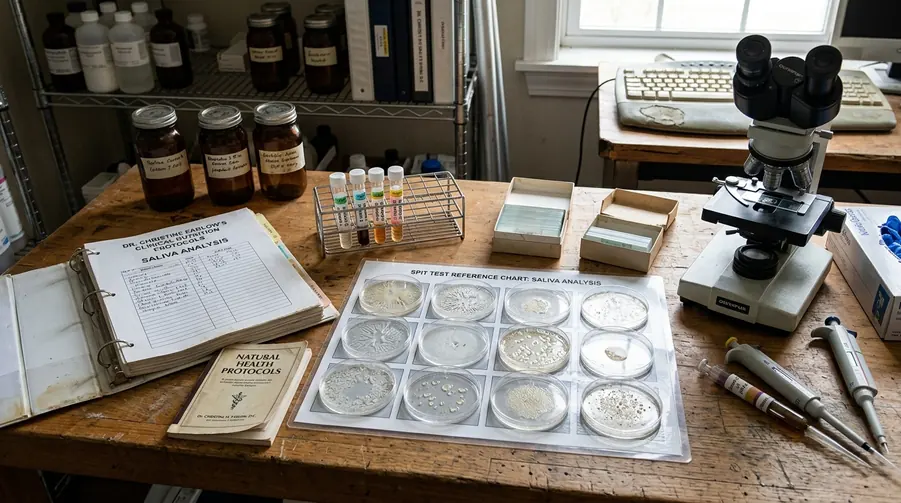
A lower-concern result is saliva that remains mostly on the surface as a thin, clear or slightly foamy layer through the 60-minute check. Slight foam can appear from normal saliva. The key is whether the sample stays at the top and the water remains mostly clear.
Common concerning patterns
Candida protocols commonly describe three visual patterns as concerning:
- String-like trails: thin “legs” descend from the saliva on the surface.
- Cloudy specks: small particles hang suspended in the middle of the glass.
- Sinking cloud: cloudy saliva settles toward the bottom as a clump or haze.
Record the timing from the observation schedule: immediately, 15 minutes, 30 minutes, 45 minutes, or 60 minutes. A vague note like “positive” is less useful than “strings appeared at 15 minutes, no bottom clump by 60 minutes.”
The biological theory is that altered mucus, oral biofilm, yeast burden, and salivary density may change how saliva disperses in still water. That theory is plausible enough for a home observation, but it does not make the test diagnostic.
What Are the Scientific Limitations of the Spit Test?
The Candida spit test is a home screening tool, not a medical diagnosis. It cannot confirm intestinal dysbiosis, systemic infection, or Candida overgrowth by itself.
For this particular saliva-water observation, the evidence gap sits at the level of the test itself, not at whether Candida can overgrow. That distinction matters. Candida biology is real; the spit test is a nonvalidated screening practice.
Why false positives happen
Morning saliva can thicken for ordinary reasons. Waking dehydrated, sleeping with the mouth open, seasonal postnasal drip, active allergies, a respiratory infection, dairy the night before, or a heavy late-night meal can all change the way saliva behaves in water.
A person who slept with an open mouth after a salty restaurant meal may produce thick, sinking morning saliva even without Candida overgrowth. That is not a failure of observation. It is a reminder to interpret the glass alongside the prior evening, the airway, and the symptom pattern.
When clinical assessment is the better next step
If symptoms persist, follow a positive home test with verifiable clinical assessment. Options may include stool testing with yeast culture or microscopy, organic acids testing interpreted by a qualified clinician, oral examination for thrush, or targeted evaluation when symptoms involve the vaginal, urinary, or immune system.
Important: Do not manage fever, painful swallowing, unexplained weight loss, blood in stool, severe abdominal pain, or recurrent infections with diet alone.
If you repeat the test, use 3 separate mornings within a 7-day period and keep the setup identical. That gives a cleaner comparison than repeating it several times in one anxious morning.
How Can You Rebalance Your Gut Microbiome Through Diet?
Diet work starts at the grocery shelf. Before adding antifungals or probiotics, remove the obvious yeast-supporting inputs: refined sugars, syrups, refined flours, alcohol, and ultra-processed snacks.
Begin with a 7-day food-label audit
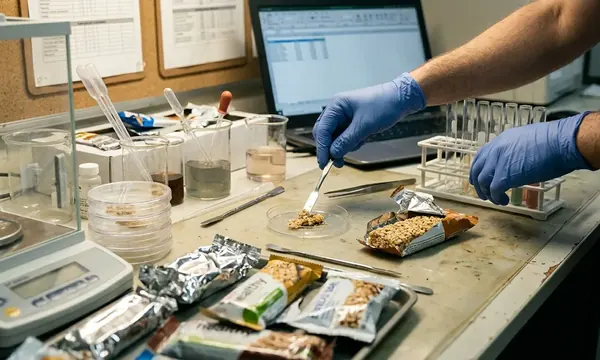
For 7 consecutive days, check packaged foods for added sugars, syrups, refined flours, artificial sweeteners, preservatives, and flavoring blends. This is where the practical work of writers such as Christine H. Farlow, D.C., author of Dying To Look Good, and KISS For Health Publishing becomes relevant: the label is often where the hidden exposure sits.
Common short-term elimination targets in anti-Candida protocols include candy, soda, sweetened coffee drinks, pastries, white bread, sweetened yogurt, alcohol, and highly processed snack foods.
Build meals around whole foods
Whole-food replacements can include eggs, fish, poultry, beans if tolerated, non-starchy vegetables, leafy greens, herbs, unsweetened cultured foods, nuts, seeds, olive oil, and avocado. This is not about eating perfectly. It is about reducing the daily supply of quick sugars and additives that keep cravings active.
Natural antifungal foods often used in food-based protocols include raw garlic, coconut oil, oregano, thyme, cinnamon, and ginger. Introduce one at a time over 3 to 4 days so you can identify digestive reactions instead of guessing.
Field Note: Probiotic foods or supplements are best added gradually, especially if you bloat easily. Start with small servings rather than stacking several fermented foods in the same day.
Summary and Next Steps for Your Digestive Health
The Candida spit test can serve as an early warning system for dietary imbalance, oral changes, and symptom clustering. It is not the final answer.
Use this sequence:
- Repeat the observation on separate mornings if the first result concerns you.
- Log symptoms and meals for 7 days.
- Audit food labels for sugars, syrups, refined flours, artificial sweeteners, preservatives, and flavoring blends.
- Remove obvious refined sugars and additives.
- Seek professional testing if symptoms persist or involve recurrent infections.
A useful symptom-food log should capture wake time, test time, sleep quality, bowel pattern, cravings, bloating, brain fog, tongue coating, recent antibiotics, alcohol intake, and the prior evening meal.
A provider visit is more productive when you bring 7 to 14 days of food labels, supplement doses, medication history, and dated symptom notes. That turns a cloudy glass into a fuller clinical conversation.