The Ancient History of Sprouting for Health
Humans have turned to sprouted grains and legumes for nourishment across ancient Asian and Middle Eastern traditions. This practice stretches back roughly five thousand years as a reliable way to unlock food from stored seeds.
Dr. Christine H. Farlow notes that the sprouting process magnifies the nutritional and vitamin profile of dormant seeds. Soaking activates enzymes, softens the seed coat, and shifts stored compounds into forms the young plant can use right away.
Growing sprouts at home remains a cost-effective route to raw, clean, plant-based protein without additives or hidden ingredients.
What Makes Sprouts Rich in Phytochemicals?
Phytochemicals act as protective plant compounds. Their activity often increases during the first few days after germination.
Broccoli sprouts stand out here. They supply glucosinolates that the body converts into sulforaphane, a compound studied for its role in cellular defense and detoxification pathways. glucosinolates and sulforaphane in broccoli sprouts
Red clover sprouts deliver genistein. This isoflavone has drawn attention for its potential to limit the blood-vessel formation that tumors require.
What Equipment Do You Need to Start Sprouting?
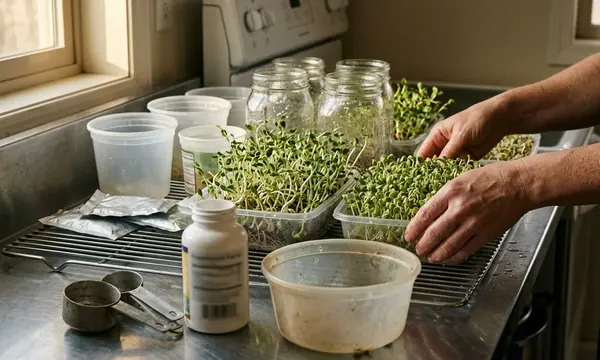
Start with wide-mouth quart glass jars, stainless steel mesh screens or breathable lids, and a simple slanted rack for drainage.
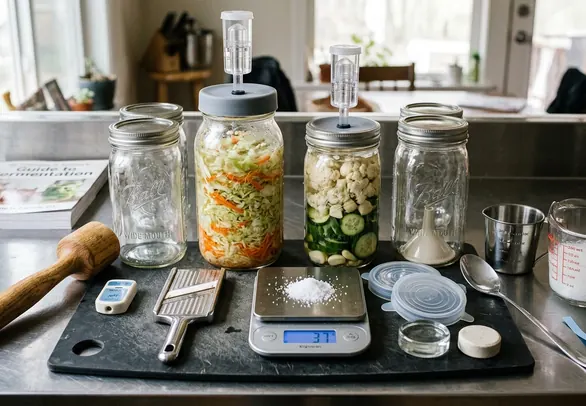
This minimal kit costs far less than repeated purchases of pre-packaged sprouts or protein powders.
Choose organic seeds labeled specifically for sprouting. Garden seed often carries lower germination expectations and may include treatments unsuitable for eating.
How Do You Handle the Daily Sprouting Process?
Begin by soaking the seeds in cool filtered water. Small seeds need six to eight hours; peas do better with eight to twelve hours before you drain them.
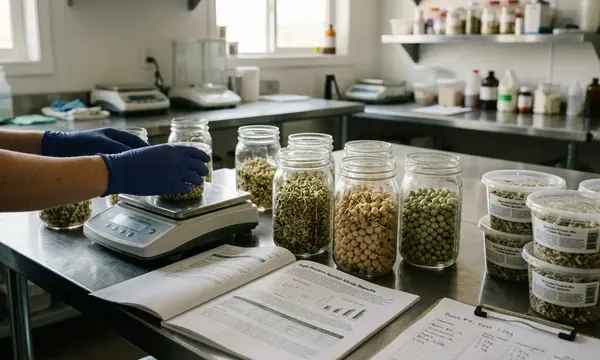
During protocol evaluations, rinse with cool water twice daily and drain thoroughly each time so no standing water remains. Keep jars at a gentle angle in a 65-to-72-degree kitchen spot away from direct sun.
On the final day, move broccoli sprouts into bright indirect light for twelve to twenty-four hours. This step encourages chlorophyll formation before harvest.
What Are the Limitations and Safety Protocols for Home Sprouting?
Home sprouting supplements a balanced diet. It still demands strict attention to cleanliness because the same moist conditions that wake seeds can support bacteria.
Seed viability varies. Older lots or those stored in heat or humidity may show lower germination rates.
Important: Wash jars, screens, and hands before each batch. Rinse equipment with freshly boiled water for extra sanitation and let it air-dry. Discard any batch that develops fuzzy mold, slime, odd discoloration, or a sour smell that lingers after rinsing.
How Can You Maximize Raw Plant-Based Protein Yields?
Certain legume sprouts reach notable protein levels on a dry-weight basis, which makes them practical additions for active adults following raw or plant-forward patterns.
Pea shoots offer strong yields. After soaking, spread them in a shallow tray and mist daily until the shoots reach three to five inches, usually in seven to ten days.
Field Note: Add a loose handful of pea shoots or broccoli sprouts to smoothies once other ingredients are blended to avoid clumping around the blades.
Bottom Line: Rotate broccoli sprouts for their glucosinolate profile, clover for milder flavor, and pea shoots for bulk protein contribution across the week.