A handful of sprouts can change a lunch you already make. Alfalfa brings a soft crunch to a sandwich; broccoli sprouts add a sharper bite to a grain bowl. The useful question is where to put them so they stay fresh, taste good, and make sense alongside the rest of the meal.
Start small: use 1/4 to 1/2 cup per serving. Keep raw sprouts cold until the food is ready, then add them at the end. That simple routine does more for an everyday lunch than treating sprouts as an ingredient that needs a special recipe or a health promise.
Give sprouts a place in the meal
Sprouts often land on top of a salad because they are easy to add there. They can do more ordinary work than that. Tuck them into a sandwich with a firm filling, scatter them over cooked grains, or add them to a bowl of greens just before eating. Their texture is especially useful when the rest of the meal is soft.
Think about the bite first. Long alfalfa stems may pull out of a sandwich when you take a bite; chopping them just before serving makes the filling easier to eat. Whole sprouts work well on an open bowl, where you can chew them thoroughly. These are small preparation choices, yet they often decide whether the sprouts become a regular purchase or sit untouched in the refrigerator.
Sprouts are sometimes described as a source of enzymes that digest the proteins and starches on your plate. Germination does activate enzymes within a seed, but that does not establish a digestive benefit for the rest of a human meal. Their crunch, flavor, and contribution to vegetable variety are sound reasons to eat them without relying on that claim.
For a familiar lunch, try adding 1/4 cup to a sandwich you already like. Notice whether the sprouts make it easier to enjoy the vegetables in the meal. That practical test tells you more about how you will use them than an elaborate recipe you make once.
What changes when a seed sprouts?
A dry seed stores materials for growth. Once it germinates, enzymes become active inside the seed, and some of its stored compounds change. Phytic acid, which can bind minerals such as zinc and magnesium, may decrease during sprouting. The size of that change varies with the seed and growing conditions; phytic acid does not simply disappear.
That distinction matters when you read claims about mineral absorption. A sprout’s nutrient profile depends on what was grown and when it was harvested. The changes during germination make sprouts interesting food, though they cannot tell you exactly how much of a mineral you will absorb from a finished lunch. For background, see this review of enzymatic and nutritional changes that occur during the seed sprouting process.
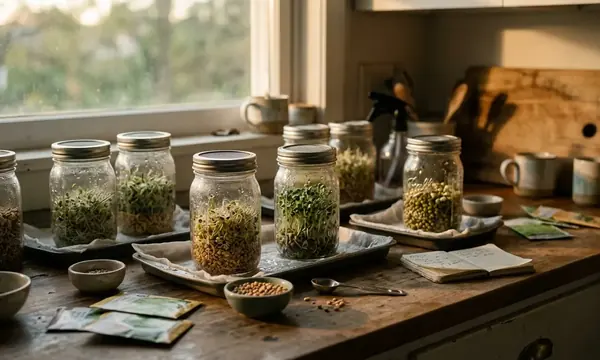
Alfalfa and broccoli sprouts commonly take roughly 3 to 6 days to grow, depending on temperature and harvest point. That helps explain why two containers of the same kind can look and taste a little different. At home, the more useful decision is what to do with the sprouts once they are ready to eat.
A useful step for broccoli sprouts
Chop broccoli sprouts immediately before adding them to a bowl. Chopping brings plant compounds that are naturally separated in the intact tissue into contact. It also distributes their stronger flavor through the grains or greens, rather than concentrating it in one mouthful.
There is no need to organize the entire meal around preserving an intact sprout enzyme. Build a varied plate, prepare the sprouts in a way you enjoy, and serve them promptly. The chemistry gives context for the ingredient; it does not turn every sprout into a measurable digestive aid.
Pair the sprouts with what is already on your plate
What belongs beside raw sprouts? Look at the main ingredients before choosing a dressing. If the bowl contains leafy greens, a little olive oil or tahini adds fat alongside vegetables containing fat-soluble vitamins. If it contains lentils and greens, lemon juice supplies vitamin C, which can help the body absorb non-heme iron from that plant-based meal.
The rest of the plate does much of the nutritional work here. Sprouts add variety, while their vitamin content differs by seed and serving size. Pairing foods thoughtfully is useful; promising a particular increase in nutrient uptake from a handful of sprouts would go beyond what the meal itself can show.
Two easy combinations
- Greens and a fat-containing dressing: Toss 1 to 2 cups of leafy greens with 1 to 2 teaspoons of olive oil. Add 1/4 to 1/2 cup of broccoli or radish sprouts just before eating.
- Lentils and lemon: Finish a lentil-and-greens bowl with 1 tablespoon of lemon juice. Add sprouts for texture, and serve while the greens and sprouts still have their distinct bite.
These pairings also solve a flavor problem. Oil helps a sharp radish sprout sit comfortably with leafy greens. Lemon brightens the deeper taste of lentils. If a bowl tastes good in its final form, you have a clear reason to make it again.
Keep the dressing decision modest. You do not need to cover the sprouts in oil or lemon; use enough to dress the meal. Add delicate sprouts after you have mixed the heavier ingredients so they stay evenly distributed instead of collecting at the bottom.
Finish the hot food before adding raw sprouts
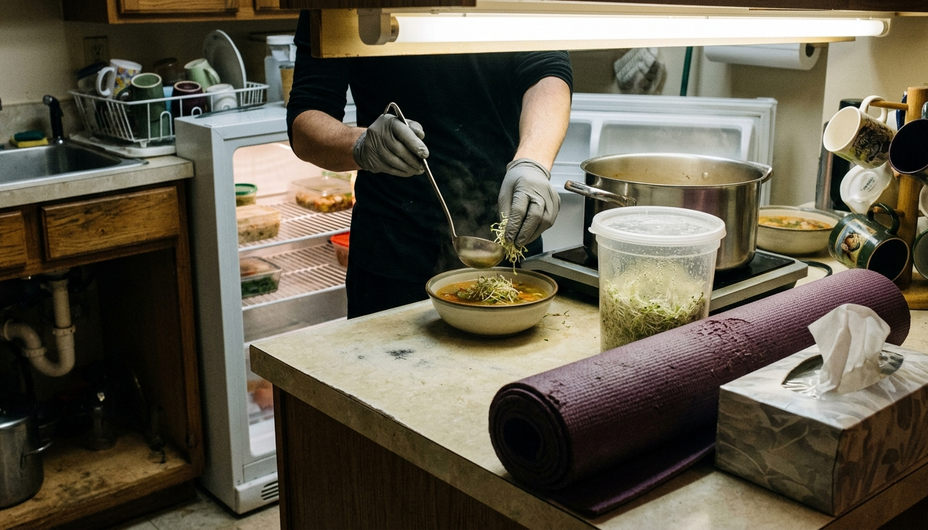
For soup, curry, or a grain bowl, treat sprouts as a table-side finishing ingredient. Cook the dish completely, take it off the heat, and portion it. If it is very hot, set it aside for 5 to 10 minutes before topping each serving with about 1/4 cup of sprouts.
This order protects the texture you bought them for. Raw sprouts keep their snap when added at the last moment; sprouts left in a warm pot soften as the meal waits. Heat can also alter their enzymes and heat-sensitive nutrients. An off-heat pan, however, has no dependable enzyme-preserving temperature, so texture is the clearest guide for this everyday step.
Warm bowls, raw sprouts: A dish that has stopped steaming can still be warm. That residual warmth does not make raw sprouts safe from pathogens. If someone eating the meal needs to avoid raw sprouts, serve thoroughly cooked sprouts instead of placing raw ones on the warm dish.
When several people are eating, leave the sprouts refrigerated while you finish and portion the cooked food. Bring them out to top each bowl immediately before serving, then return the container to the refrigerator. The sequence keeps the raw ingredient separate from a pot that may go back on the stove and prevents it from sitting through a long meal service.
Keep harvested sprouts cold and dry enough
Storage starts with surface moisture. Wet sprouts deteriorate quickly; sprouts left exposed can dry out. After purchasing or harvesting them, transfer them to a clean, covered container with a dry paper towel and refrigerate them promptly. Replace the towel when it becomes wet.
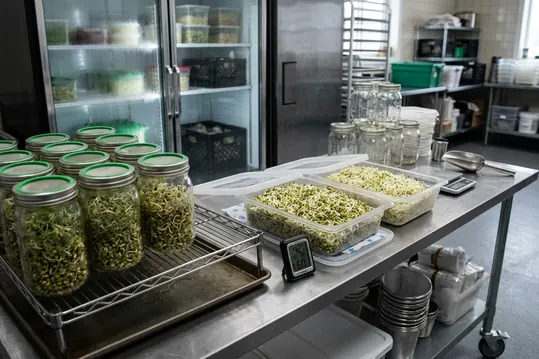
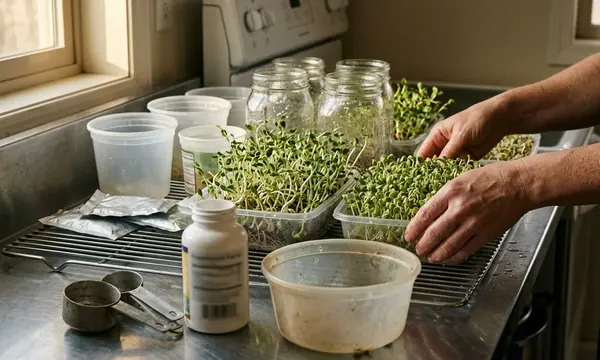
A mesh-topped jar is useful in the growing process, but it leaves harvested sprouts exposed during storage. A covered container gives you a simpler routine for the refrigerator: take a serving, close the lid, and put the rest back. Keep the refrigerator at 40°F (4°C) or colder, and plan to use fresh sprouts within 2 to 3 days.
Check the sprouts before you add them to food. Discard any that become slimy or develop an off odor. Cold storage slows deterioration; it cannot remove pathogens that may already be present. A fresh appearance, therefore, cannot serve as a safety test for raw sprouts.
Who should skip them raw? Pregnant people and people with weakened immune systems should avoid raw sprouts and choose thoroughly cooked sprouts instead. That decision belongs at the start of meal planning: a warm bowl with raw sprouts added on top remains a raw-sprout meal.
For everyone else, buying an amount you can use promptly makes the storage routine easier. A container that moves from refrigerator to finished plate and back again gives the sprouts less time to sit out while you prepare other ingredients.
Make a lemon-dressed quinoa bowl
Here is a complete way to put the decisions together. Prepare the cooked part first, mix the dressing while it rests, and handle the sprouts last. The finished bowl has warm grains, a bright dressing, and raw sprouts with their texture intact.
- Cook and rest the quinoa. Put 1/2 to 3/4 cup cooked quinoa in a serving bowl. Leave it off the heat for 5 to 10 minutes, until it is no longer steaming. Do not return the bowl to a hot pan after this point.
- Whisk the dressing. Combine 2 teaspoons olive oil, 1 tablespoon lemon juice, and 1 small crushed garlic clove. Toss it through the quinoa so the grains are dressed before the delicate ingredients go in.
- Finish with sprouts. Take 1/4 cup alfalfa sprouts and 1/4 cup broccoli sprouts from the refrigerator. Chop the broccoli sprouts immediately before serving, fold both kinds into the dressed quinoa, and eat the bowl at once.
If you are making the bowl for lunch, the order is easy to repeat: cooked quinoa into the bowl, a short off-heat rest, lemon–olive oil dressing through the grains, then alfalfa and broccoli sprouts straight from the refrigerator. The quinoa stays pleasantly warm, the sprouts stay raw and crisp, and the garlic and lemon carry flavor through every forkful.