Why Phytate Changes the Minerals You Absorb
A dry lentil carries a phosphorus reserve for its next stage of growth. Much of that reserve takes the form of phytic acid, or myo-inositol 1,2,3,4,5,6-hexakisphosphate: a molecule with six phosphate groups attached to one inositol ring. Its salts are called phytates.
Those phosphate groups explain both its usefulness to the seed and its effect during digestion. Their negative charges attract positively charged mineral ions, including zinc, calcium, magnesium, and iron. This binding process, called chelation, can make some of those minerals less available for absorption.
When I compare a dry seed with its sprouted counterpart, I separate two questions: how much mineral does it contain, and how readily can digestion make that mineral available? An iron-rich food can still contain compounds that restrict access to part of its iron.
Where Seeds Store Their Phosphorus
Storage follows the seed's anatomy. In cereals, phytate concentrates in the aleurone and bran, with substantial amounts in the germ of some grains. Legumes store much of theirs in the cotyledons, the fleshy seed leaves that make up most of a lentil or chickpea. Removing a hull therefore does not automatically remove the main phytate reserve.
Humans produce too little digestive phytase to extensively break down dietary phytate in the small intestine. Mineral binding and precipitation during digestion can consequently reduce absorption. Germination changes the starting material by activating the seed's own machinery before the food reaches your plate.
How Water Uptake Starts Phytate Breakdown
Imbibition means water uptake. As a dormant seed hydrates, metabolism resumes; oxygen and a suitable temperature support the embryo's continued growth. After the initial soak, drainage gives that growing embryo access to air.
This shift activates existing phytase and can increase enzyme production. In cereal grains, the aleurone and scutellum are relevant parts of this reserve-mobilizing system. Legumes have different anatomy, but the purpose is the same: release stored nutrients to support growth.
From IP6 to Smaller Phosphates
Phytase hydrolyzes phosphate ester bonds sequentially. Phytic acid, often abbreviated IP6, becomes lower inositol phosphates such as IP5 and IP4 as inorganic phosphate is released. The sprout uses that phosphate. Progressive removal of phosphate groups generally weakens the molecule's mineral-binding effects, potentially improving access to iron, zinc, and calcium during digestion.
Germination also activates proteases, which break proteins into smaller peptides and free amino acids. Several changes happen together inside that swelling seed.
Many plant phytases work under mildly acidic conditions. For kitchen preparation, however, the useful controls are viable seed, potable water, drainage, and appropriate timing. A splash of vinegar does not establish a measured enzyme-friendly pH or sanitize the batch.
A Clean Jar Routine for Lentils and Mung Beans
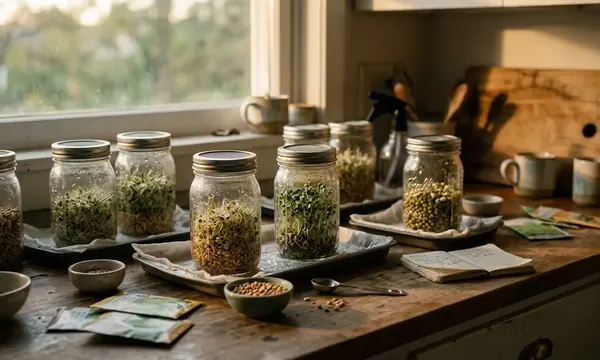
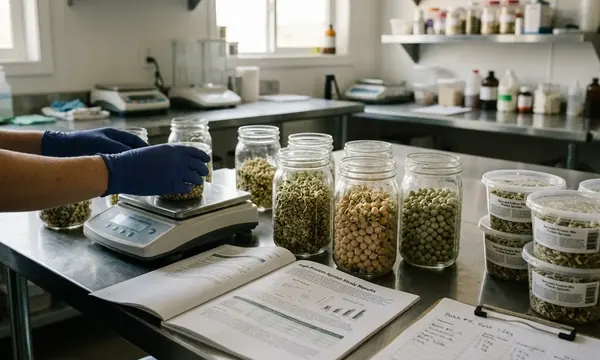
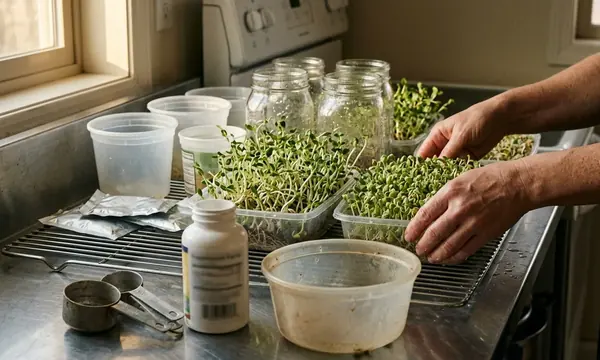
Start with a small batch. A roughly one-liter wide-mouth jar gives two tablespoons of dry mung beans room to expand. Add a food-grade stainless steel mesh lid and a rack that holds the jar at an angle. Potable tap water is suitable; routine household sprouting does not require chlorine-free water.
Reading food labels matters here, too. Choose clearly identified seed sold for edible sprouting, without agricultural seed-treatment coatings. Look for an intact seed rather than relying on words such as “raw” or “organic” to establish germination capacity.
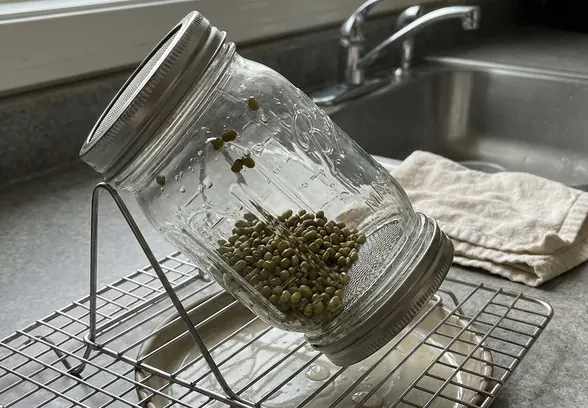
- Prepare the equipment. Wash your hands, jar, lid, and drainage support. Inspect the seeds and remove damaged material.
- Soak the batch. Cover whole green lentils or mung beans with cool potable water for 8–12 hours.
- Drain completely. Discard the soaking water, then rinse with fresh potable water. Leached soluble compounds can color the water; color does not measure phytate removal.
- Set up airflow. Rest the jar mouth-down at roughly 45 degrees, away from direct sunlight, at approximately 18–22°C.
- Rinse twice daily. Drain thoroughly after each rinse and return the jar to its angled position. Watch for a small white root emerging through the seed coat.
Plan To Cook
Clean equipment and regular rinsing support careful handling. Finish sprouts with cooking to address sprout-associated pathogens, and discard any batch with mold, slime, or an objectionable odor. A fresh smell alone cannot establish safety.
Match the Soak to the Seed
A lentil, a buckwheat groat, and an almond behave differently in water. Water must reach a viable embryo, and the food must retain the structures needed for growth. Processing history matters as much as the name on the bag.
Use these starting schedules for small batches of edible sprouting seed:
- Whole green lentils and mung beans: soak for 8–12 hours; a short white root commonly appears 24–48 hours after draining.
- Chickpeas: allow for a longer germination window, commonly 24–72 hours after draining. Look for the root protruding through the seed coat.
- Raw, unroasted buckwheat groats: begin with a 20–30-minute soak, then rinse thoroughly to remove the slippery surface residue.
- Quinoa: begin with a 2–4-hour soak and watch for a fine white root as germination progresses.
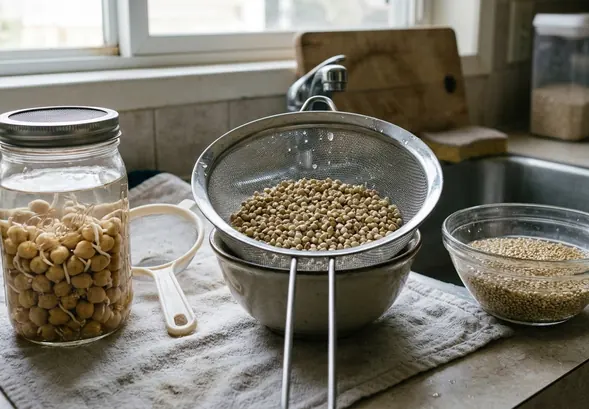
A visible root confirms embryo growth, not a measured phytate reduction or a universal peak in mineral availability, so use it to track germination rather than to assign a nutritional score.
Oats and Nuts Need Different Expectations
Commercial rolled oats are usually heat-treated and unsuitable for sprouting. Oats also generally have less useful phytase activity than rye. Adding milled rye or buckwheat can supply phytase to hydrated grain mixtures under controlled processing conditions; a repeatable food-processing recipe is the appropriate setting for that approach.
With culinary nuts, plumping mainly demonstrates hydration. Viable almonds and pumpkin seeds can germinate, while split kernels, roasted seeds, and damaged embryos should be excluded from sprouting batches. Soaking also changes texture and can leach minerals, which deserves attention alongside any proposed nutritional benefit.
Chia and flax develop a moisture-retaining gel and suit methods other than the ordinary rinse-and-drain jar. Hulled hemp hearts have lost or damaged the structures needed for germination.
Keep the Phytate Benefit When You Cook
Cooking denatures phytase, but the enzyme's earlier work remains: heat does not rebuild phytate that has already been hydrolyzed. Mineral nutrients also survive ordinary cooking temperatures. This makes cooking a practical next step for sprouted legumes.
Roasting and low-temperature drying produce different textures. Heat-sensitive vitamin losses depend on temperature, duration, and water use. Dehydrator settings around 40–46°C are often used for drying sprouted seeds, but that process does not replace a pathogen-killing cooking step.
Chill Between Steps
When pausing preparation, refrigerate thoroughly drained sprouts promptly at 4°C or below. Cooling slows both germination and microbial growth; keep cooking in the plan for the finished meal.
At the kitchen sink, rinse a drained jar of two-day green lentil sprouts. The split skins expose pale interiors, and white root tips catch against the mesh lid. Tip them into a saucepan and cook until tender. Then fold the warm lentils into a lemon-dressed whole-food bowl, letting the dressing settle between the softened seeds.